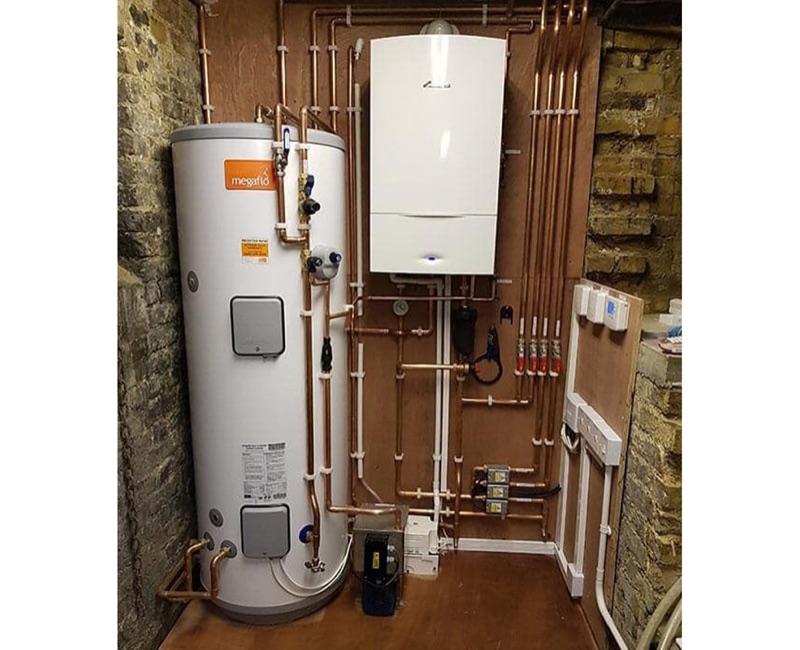
Keep electrical and safety-device work out of DIY checks
Do not remove electrical covers, carry out live tests, repeatedly reset trips or bypass a thermal cut-out. For overheating or very hot discharge, stop the heat sources using normal controls only if safely accessible, keep clear and seek urgent help. Leave the discharge route unobstructed. Water at electrical fittings means keep away. Tell the booking team if the cylinder is unvented: the work needs appropriate competence as well as electrical expertise.
Make a clear distinction between reading a display and investigating inside electrical equipment. This article asks you to record the former. It does not ask you to prove that a circuit is dead, test terminals, remove a heater cover or reset an internal safety device. If a video moves from normal controls to exposed components, it has crossed the boundary of these homeowner observations.
A repeated trip deserves a report that includes when it happened and which ordinary action preceded it. Do not keep energising the equipment to see whether it trips again. If there is a burning smell or visible water near electrical fittings, keep away and lead with that information when seeking help.
If an engineer has advised leaving equipment off, make sure everyone in the household knows. A well-intentioned person trying another boost cycle can undermine that advice. Ask the professional who makes the assessment to explain when and how normal use can resume. The absence of hot water is inconvenient, but it does not justify bypassing the device that stopped operation.
Source: Heatrae Sadia PremierPlus: user safety and fault-finding guidance (PDF, pp. 4 and 22)
Supply, timer, thermostat, cut-out or element: what is the difference?
The electrical supply provides power; the timer decides when the selected heating period is allowed; the thermostat controls temperature; the element supplies heat. A separate thermal cut-out provides protection against overheating. These functions explain why a cold cylinder is not enough evidence to condemn the element. A thermostat problem and an interrupted supply can both prevent heating without the same repair being appropriate.
The Electromax manufacturer's fault charts treat off-peak and boost operation separately and consider supply, controls, element and cut-out checks. That is a model-specific example, not proof that your cylinder has identical wiring or two heaters. Its professional tests are not user checks, and this article does not reproduce electrical measurements or reset instructions.
A normal control can indicate that heat is requested without proving that power reaches the element. Likewise, one successful boost does not demonstrate that a separate timed route is operating. The assessment should follow the actual installed path and explain where the failure occurs. That is why buying an element based on a switch light can result in replacing a working part.
For your own safe check, read the timer's clock, programme and ordinary override state against its manual. Identify the labelled control normally used by the household and note any power interruption or meter change. Leave covers closed. If the controls are unfamiliar, an overview photograph and model label give the professional a starting point without requiring you to identify wiring.
| What still works? | Possible area needing assessment | Useful safe check |
|---|---|---|
| Boost heats; schedule does not | Timed control or its supply path | Read clock, programme and override state |
| Schedule heats; boost does not | Boost control or associated heating path | Identify the normal boost control and its displayed state |
| Neither route heats | Supply, control, safety device or heater | Record displays and trips; do not keep resetting |
| Some hot water, but shortage later | Heating completion or household demand | Compare programme and ordinary use before shortage |
Source: Heatrae Sadia Electromax: separate boost and off-peak fault paths (model-specific manual)
Name the symptom before choosing a replacement part
Does the hot tap flow normally but stay cold, or is there little or no flow? Is every outlet affected? The PremierPlus manufacturer manual separates flow faults from heating faults and distinguishes an electrically heated cylinder from one heated indirectly by another source. Its fault list includes control and cut-out problems, not just the heater itself. If you are unsure which system you have, provide the accessible model label and photographs of normal controls. Do not remove covers to identify it.
Keep the enquiry specific to electric heating if that is what has stopped. A cylinder is the store of hot water; an immersion is an electric heat source associated with it. If a boiler also heats the cylinder, describe which method normally provides the household's hot water and which method has failed. Do not assume a working boiler proves the electric route is working, or the reverse.
If only one shower is affected while hot water remains available at other outlets, include that distinction before asking for an immersion replacement. If there is no flow at all, describe it as a flow problem rather than simply saying the water is not hot. The whole-system cylinder guide linked below covers those branches in more detail.
The observations in this article are external: normal controls, labels and the hot-water behaviour you have already experienced. Identifying electrical connections, testing a supply and removing an immersion assembly are professional tasks. A visible indicator or a guessed component name is not a substitute for that diagnosis.
Source: Heatrae Sadia PremierPlus: user safety and fault-finding guidance (PDF, pp. 4 and 22)
Boost works but the timer does not: labels are not a diagnosis
A UK tenant on DIYnot tried timer programmes and override settings while boost kept producing hot water. In the follow-up, the poster said an on-site inspection found incorrect wiring; rewiring was still needed. That is one unverified household account, not the explanation for every failed timer. It shows why the useful question is what each control actually operates. Ask for the control and supply path to be checked before authorising an element replacement. Do not copy wiring changes from a discussion thread.
Separate three questions: what the controller displays, what programme is selected and what hot water is actually available afterwards. For example, you may know that pressing boost led to usable hot water but not whether the scheduled period operated. Report exactly that, rather than saying the heater itself has been proved sound in every mode.
Read the accessible controller against its own user instructions. Note the displayed time, day, programme and any ordinary holiday or override setting. If there was a power interruption or somebody changed the programme, put that on the timeline. Photograph the settings before changing normal user options so the earlier state is not lost.
Do not assume the words boost and timed identify separate elements, separate electricity supplies or a particular wiring arrangement. Installations differ, and old labels may not explain alterations. Ask the attending person to establish which function each control operates. The useful completion check is that the intended timed route works, not simply that one manual boost produces hot water.
Source: Public tenant account and reported inspection finding, DIYnot, May 2016
A dark switch does not tell you there is a fuse to change
A new flat owner in a September 2024 UK discussion initially suspected a fuse, but also described changed tariff arrangements and heating that worked only at certain times. There was no confirmed repair. Before calling, note the control labels, when an indicator is on and whether the supplier or meter arrangements recently changed. Ask the supplier to clarify the actual tariff and switching times where relevant. Do not assume an off-peak period, a fuse rating or that the upper and lower controls are wired a particular way.
A recent meter or tariff change is relevant history, but it is not proof that the supplier caused the fault. Ask the supplier to confirm the actual account arrangements and any controlled switching relevant to your system. Keep that information separate from the engineer's assessment of the property's equipment. Each party can then address the part within its scope.
Do not copy a neighbour's off-peak hours or assume a programme found online applies to your meter. A clock setting, a tariff period and an electrical switching arrangement are not necessarily the same thing. If you do not know the arrangement, say so rather than staying awake to inspect unfamiliar equipment.
An indicator light is a clue to report, not an electrical test. Describe when it illuminates and what the water does afterwards. Do not open a switch to search for a fuse, choose a larger fuse or move wiring based on a photograph. Those actions do not establish why the timed supply or heater is failing and may introduce a separate hazard.
Source: Public homeowner account: unfamiliar immersion switches, September 2024; unresolved
It was just repaired and the water is cold again
One tenant reported hot water returning after a thermostat replacement, then failing again after a little over a week; waiting overnight did not restore it. The discussion did not establish the new cause. For a repeat fault, tell the repairer exactly which part was replaced, when water last heated normally and whether the new symptom matches the old one. Ask how the repair will be checked under the heating schedule you actually use. Do not assume another thermostat, or the same reset, is the answer.
Keep the repair history short but exact. Record the attendance date, the part named on the job sheet, when hot water returned and when it failed again. Add whether there was a new trip, smell, sound or change in control behaviour. If you only know that “something was reset”, use that wording and ask the repairer to clarify the record.
A repeat failure may look identical to the original symptom without establishing that the same component has failed. Ask what the earlier tests showed and what will be checked before another part is ordered. If the first visit could not verify the ordinary overnight programme, identify that as an outstanding question.
For rented homes, send the same timeline to the agent and contractor so the next appointment is not booked as a completely unrelated first report. Include the original job reference where available. Ask who authorises additional work and how a repeat visit is charged. The purpose is to continue the investigation with useful history, not to assign responsibility from the time sequence alone.
Source: Public tenant account: hot water failed again after repair, December 2024; unresolved
Some hot water, but not enough for the evening
An electric-only household described a replacement cylinder and several visits without resolving evening shortages. They had reduced daytime use and tried extended boost, but the thread ended without a verified solution. This is a different enquiry from water that never heats. Record when useful hot water is available, when it runs out and which ordinary programme was selected. Describe the bath or shower demand, rather than guessing that the cylinder must be too small. A proposed replacement should explain why the present system cannot meet the need.
For this enquiry, describe a normal day rather than just the final cold shower. Note the scheduled heating period, when the first person used hot water, whether anyone had a bath and when the shortage appeared. Include changes to household demand or a recently fitted shower. Rough timings are sufficient; there is no need to empty the cylinder experimentally.
The question is whether the system is delivering its intended supply under your routine. Ask the assessor to distinguish a problem with heating operation from a mismatch between the available supply and household demand. Do not accept a capacity conclusion based only on the number printed on the cylinder label or a single shower duration.
If boost has become a daily workaround, say whether it reliably provides useful hot water and how the arrangement differs from your previous routine. Avoid turning that observation into an energy-cost calculation without your actual tariff and measured consumption. Repairing an operating fault, changing a schedule and choosing a larger cylinder are different decisions that require different evidence.
Source: Public household account: persistent evening shortage, December 2023; unresolved
Agree a repair scope that answers your actual problem
Ask whether the appointment covers electrical supply and control diagnosis, cylinder work or both. If a component is condemned, request the finding that supports replacement and the correct part specification. Confirm any draining or access work, the expected interruption, additional labour and return-visit charges. For an intermittent or timed-heating problem, agree what the completion check will demonstrate and what information to provide if the symptom returns. An appointment that restores one boost cycle should not be described as proving an untested overnight schedule works.
Before accepting an element replacement, ask what finding points to that part and whether the controller or supply has also been assessed. This is particularly important when one operating mode still works. A quote should make clear whether it addresses the exact complaint or only one identified fault within a wider investigation.
Discuss access before the work starts. A cylinder in a tightly fitted cupboard, with stored items or boxing around it, may need different preparation from an accessible installation. Ask what you should move safely beforehand and whether draining, refilling, disposal of parts or a return appointment is included in the proposed scope. Do not remove boxing yourself simply to make the job appear easier.
AK's £60 callout covers attendance, while plumbing work is £160 per hour with the hourly quote agreed before work. AK is not VAT-registered, so no VAT is added. Confirm the scope of electrical or cylinder work and any parts separately; the attendance fee does not imply an included diagnosis or repair. Published pricing is linked below.
Check the result against the mode that failed
A repair should be assessed against the original complaint. If the problem was no heat under any setting, ask which operating functions were checked. If boost worked but scheduled heating failed, ask specifically how the timed route was verified. If the shortage occurred late in the day, ask what the visit established and which ordinary-use observation remains necessary.
You may not be able to demonstrate an overnight programme during a daytime appointment. That does not make the visit useless; it makes a clear follow-up plan important. Agree what settings should remain, what result to observe and how to report a failure. Do not alter several controls between the repair and that observation unless instructed, because the comparison would become difficult to interpret.
Keep the job sheet with the controller instructions. Ask for any unfamiliar normal control to be explained before the engineer leaves, including how to return from an override to the ordinary programme. AK covers Greater London from North London, with a 24/7 phone line and emergency dispatch. When calling about recurrence, give the original reference and describe the same operating mode so the history follows the enquiry.